




Living Expenses

The average monthly cost for a student living in Japan (including tuition) is as follows:
Average monthly cost of living
(Excluding the cost of study and research)

Breakdown of the average monthly cost of living (National average)
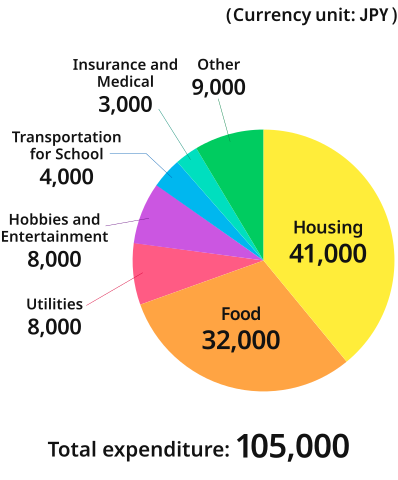
Source: 2023 Lifestyle Survey of Privately-Financed International Students (JASSO)
Compared to other cities, life in Tokyo is slightly more expensive. Japan has an outstanding national health insurance system that even foreign students can join immediately after entering the country. The cost is calculated based on your yearly income. Since most students do not have a large income (excluding scholarships), standard cost is around 10,000-12,000 yen per year. By obtaining Japan’s National Health Insurance, you can receive a medical examination at any clinic or hospital in the country, and will have to pay only 30% of your medical and medicine costs. The remaining 70% will be covered by your health insurance.
In addition, foreign students are allowed to work approved part-time jobs while attending school in Japan. Ordinarily, income from a part-time job is sufficient to cover cost-of-living expenses. Before beginning a part-time job, you must first receive a special permission from the Japanese immigration office. This permission is usually issued under normal circumstances.
With this work permission, Japanese language school students, university students, and graduate students (including research students) can work up to 28 hours total within any consecutive 7-day period during the academic term. During long vacations such as spring and summer breaks, you can work up to 8 hours per day (40 hours per week).
Students can use the internet and job search publications when looking for a part-time job. These types of publications can easily be purchased in most bookstores and train stations. There are numerous free publications as well.